
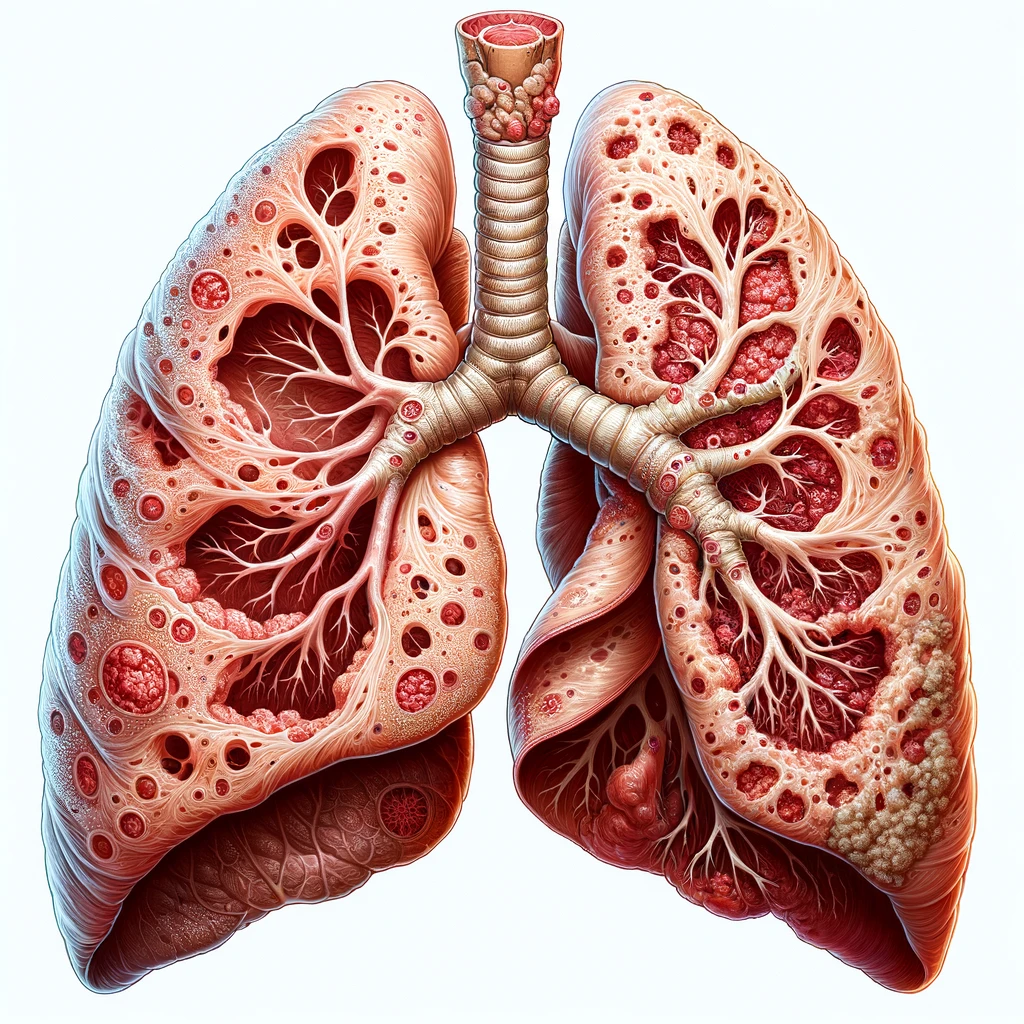
To describe the dire conditions of Dachau concentration camp during World War II as a symbolically predominant affliction affecting prisoners physically, it is a stark portrait of health crises with tuberculosis (TB). In this setting designed to make human dignity recede, the common occurrence of TB points to a grave consequence of systemic neglect and harsh living conditions. This paper reviewed the prevalence, types, complications, and broader public health implications of tuberculosis at Dachau by the use of historical insights so as to contribute to understanding the widespread public health problems in Europe after the war.
Immediately after liberation, 27.54% of 2,267 ex-prisoners subjected to the medical examination were found to have alarming radiological signs of active pulmonary TB, from minimal to advanced. As such, such a high rate of incidence reflects very brutal realities that the inmates were forced to live under: severe overcrowding and chronic malnutrition that allowed disease to spread like wildfire. Over 50% of the diagnosed TB cases were bilateral TB. This is, in fact, an indication that the infections at the refugee camp were severe and of an extensive nature.
Complications from TB at Dachau extended beyond the disease itself. Some reported the cases related to pneumothorax, wherein air keeps on building up in the pleural space, thus collapsing the lung; another risk added to an already precarious health situation.
Out of these, twelve had pneumothorax on one side and active TB on the other, an underlining implication for very extreme medical challenges and a pressing need for very effective treatment strategies within the camp’s insufficient healthcare framework.
Furthermore, the co-existence of TB with other respiratory diseases like pneumonitis and pleural effusion was more confounding. This concomitant infection, most probably of tubercular origin, told more about the deeper and more pervasive penetration of TB that was emblematic of a systemic failure of healthcare within the camp. Added to these were the difficulties of diagnosis and hence therapy of TB; language barriers, unreliable medical histories, and very poor clinical examinations. The enormity of the health crisis with extremely poor resources made effective treatment almost insurmountable. Those conditions were a looking glass not only of the immediate circumstances at Dachau but really cast light on the broader implications for post-war public health management across Europe.
High prevalence among the displaced was a warning of the coming hike in TB cases across the continent – as in the concentration camps: bad eating and overcrowding. This denotes the fact that the case of Dachau provides some really devastating effects regarding the extremes of living conditions over human health. This is rather a somber reminder of the very pressing nature of the need for strong public health strategies to be in place for the management and prevention of TB and other communicable diseases in populations where severe economic, environmental, and social challenges prevail. Dachau lessons are more than history but rather life’s lessons for the present and future public policies in health, which call for proper nutrition, enough space, and accessible healthcare, which will be better to curb the spread of diseases like tuberculosis.
Sources:
Piatt, Arnold D. (1946). A Radiographic Chest Survey of Patients from the Dachau Concentration Camp. Radiology, 47(3), 234–238. doi:10.1148/47.3.234
Murray, J.F.; Loddenkemper, R. (2018). [Progress in Respiratory Research] Tuberculosis and War Volume 43 (Lessons Learned from World War II) || Tuberculosis in Germany before, during and after World War II. , 10.1159/isbn.978-3-318-06095-9(), 64–85. doi:10.1159/000481475
DANIELS M. Tuberculosis in Europe during and after the second world war. Br Med J. 1949 Nov 12;2(4636):1065-72. doi: 10.1136/bmj.2.4636.1065. PMID: 15395480; PMCID: PMC2051747.
 The Medical Humanist
Leave a comment